Global Barriers to Eye Care Access: A Systematic Review and Meta-Analysis of Gender, Geographic, and Economic Disparities
Doi: 10.36351/pjo.v42i2.2132
DOI:
https://doi.org/10.36351/pjo.v42i2.2132Abstract
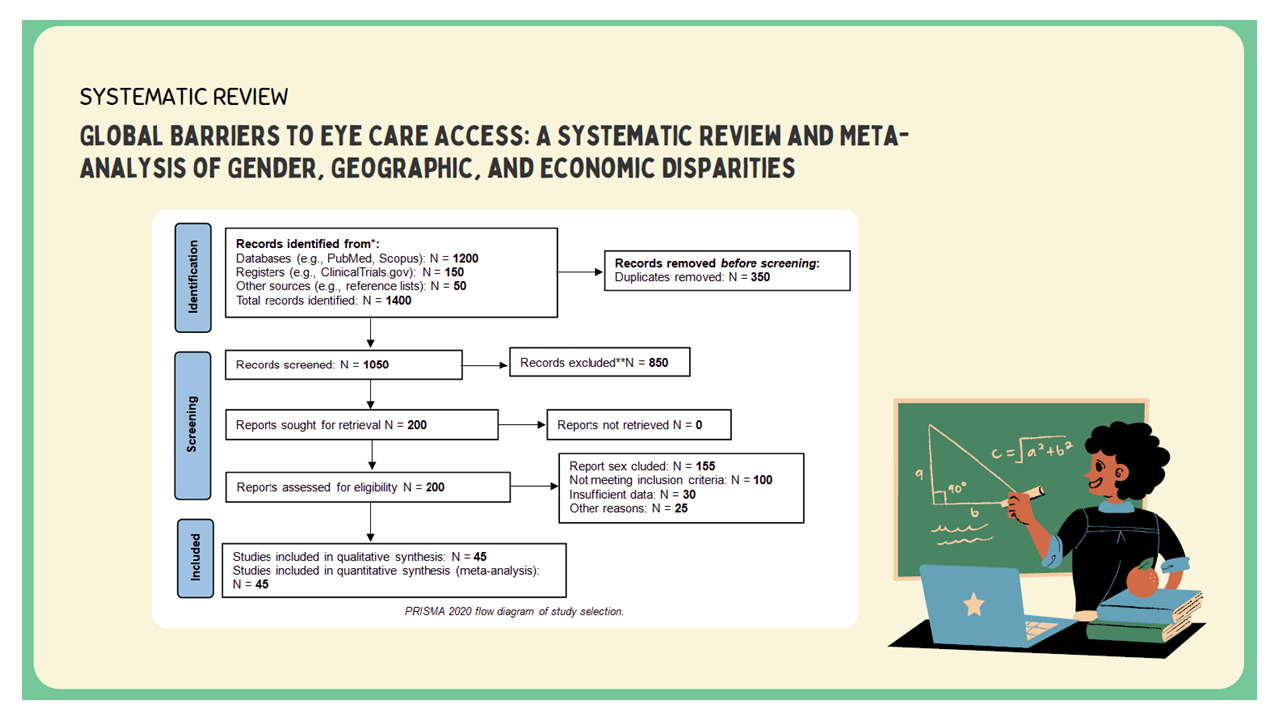
Access to eye care remains a major global challenge, particularly in low- and middle-income countries and rural areas, where financial, geographic, and awareness-related barriers contribute to preventable blindness. This systematic review and meta-analysis synthesized 45 studies from 28 countries including 1.2 million adults, following PRISMA 2020 guidelines. The pooled prevalence of financial, geographic, and awareness barriers was 58.7%, 41.2%, and 39.8%, respectively, with women, rural residents, and low-income groups disproportionately affected. Subgroup analyses confirmed significantly higher odds of access barriers in low-resource settings. Cataract and uncorrected refractive errors remained the leading global causes of blindness. Findings highlight the need for equity-focused interventions such as universal health coverage, telemedicine, mobile clinics, and community-based education. Addressing these systemic barriers is essential to achieve Vision 2030 goals and reduce avoidable blindness worldwide.
Downloads
Published
How to Cite
Issue
Section
License
Copyright (c) 2026 ANKITKUMAR VARSHNEY, Debanjali Bhattacharjee

This work is licensed under a Creative Commons Attribution-NonCommercial 4.0 International License.