Lid, Ocular and Orbital Lesions, Their Patterns of Presentation, Diagnosis and Therapeutic Outcome in Adults at a Tertiary Care Hospital of Karachi
Doi: 10.36351/pjo.v42i4.2396
DOI:
https://doi.org/10.36351/pjo.v42i4.2396Abstract
Purpose: To determine patterns of presentation, diagnosis and therapeutic outcome of lid, ocular surface, orbital and adnexal lesions in adults at a tertiary care hospital of Karachi.
Study Design: Retrospective observational study.
Place and Duration of Study: Isra Postgraduate Institute of Ophthalmology from January 2025 to December 2025.
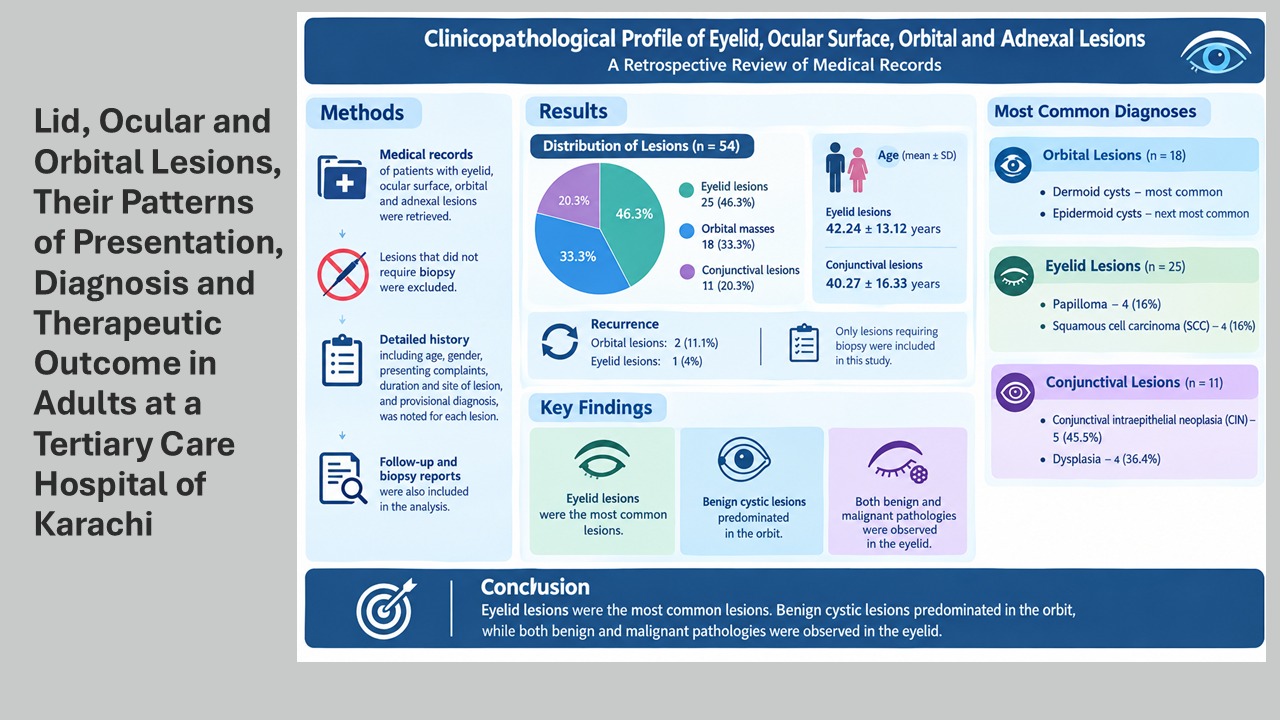
Methods: Medical records of patients with eyelid, ocular surface, orbital and adnexal lesions were retrieved. Lesions that did not require biopsy were excluded. Detailed history including age, gender, presenting complaints, duration and site of lesion, and provisional diagnosis, were noted for each lesion. Follow-up and biopsy reports were also included in the analysis.
Results: Out of54 records, 18 (33.3%) involved orbital masses, 25 (46.3%) involved eyelid lesions, and 11 (20.3%) had conjunctival lesions. The mean age of patients with eyelid lesions was greater (42.24 ± 13.12 years) than those with conjunctival lesions (40.27 ± 16.33 years).Recurrence was observed in 2 (11.1%) cases of orbital lesions and in 1 (4%) case of eyelid lesions. The most common orbital lesions were dermoid cysts and epidermoid cysts. Papilloma and squamous cell carcinoma (SCC) were each diagnosed in 4 (16%) cases. In conjunctival lesions, conjunctival intraepithelial neoplasia (CIN) was the most frequent diagnosis, seen in 5 (45.5%) cases, followed by dysplasia in 4 (36.4%) cases.
Conclusion: Eyelid lesions were the most common lesions. Benign cystic lesions predominated in the orbit, while both benign and malignant pathologies were observed in the eyelid.
Downloads
Published
How to Cite
Issue
Section
License
Copyright (c) 2026 nazia qidwai

This work is licensed under a Creative Commons Attribution-NonCommercial 4.0 International License.